3D-5D DIMENSIONS, UPDATE DOCUMENT
Things, thought structures and factors in different dimensions
Anssi Matias Miettinen, 9.8.2026
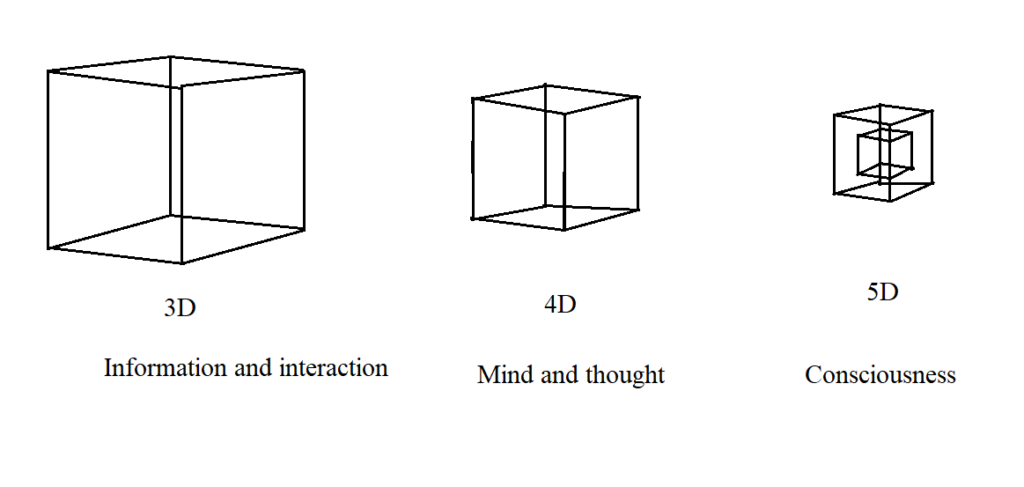
In Metatronism, and through this in Hypercubism, the dimensions 3D-5D are not physical dimensions, but are a geometric model for the structure of reality and experience.
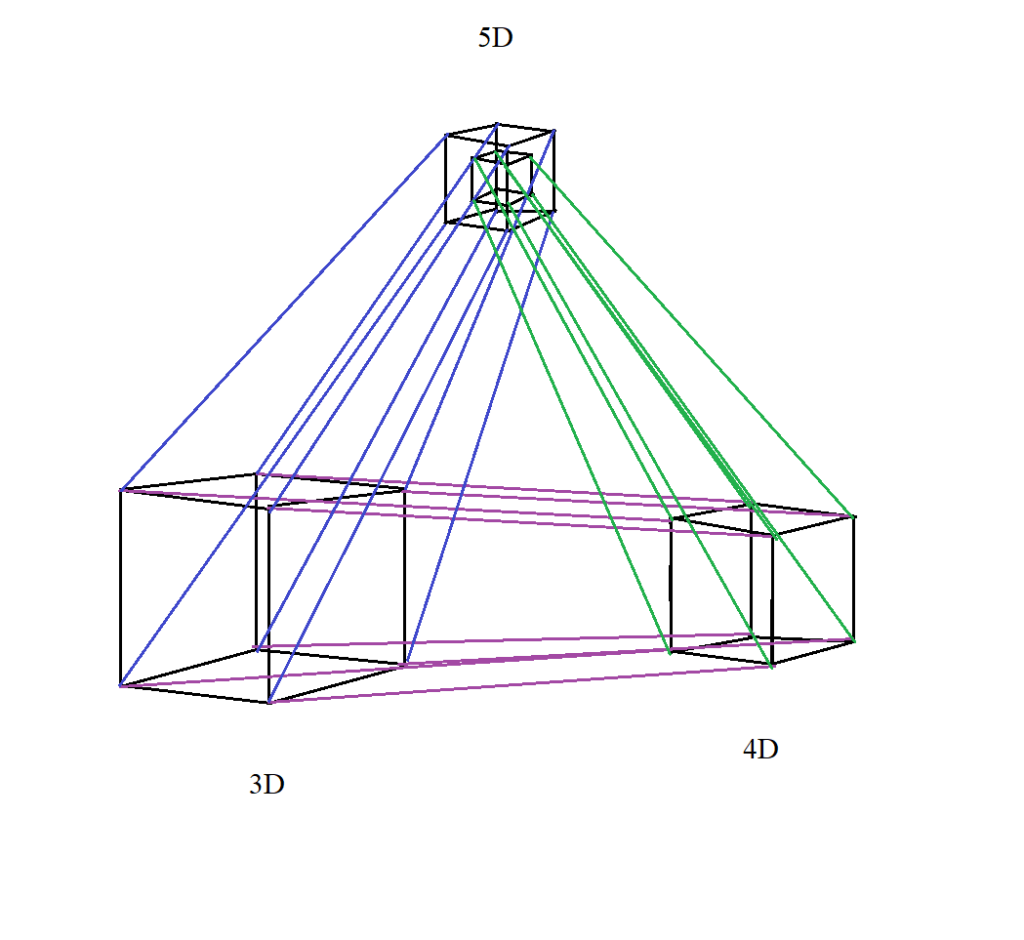
The dimensions 3D (Information and Interaction), 4D (Mind and Thought), and 5D (Consciousness) presented in the Metatronism Summary and Hypercubism Theory also contain structures according to the thought structure diagrams.
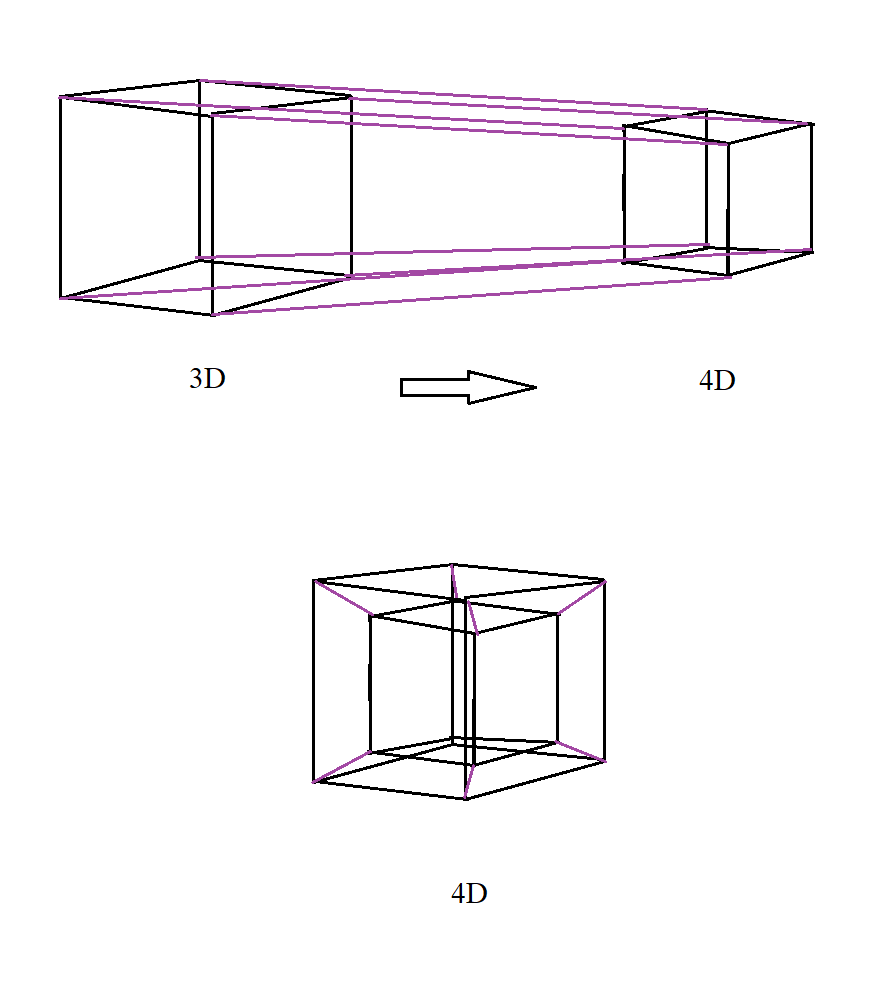
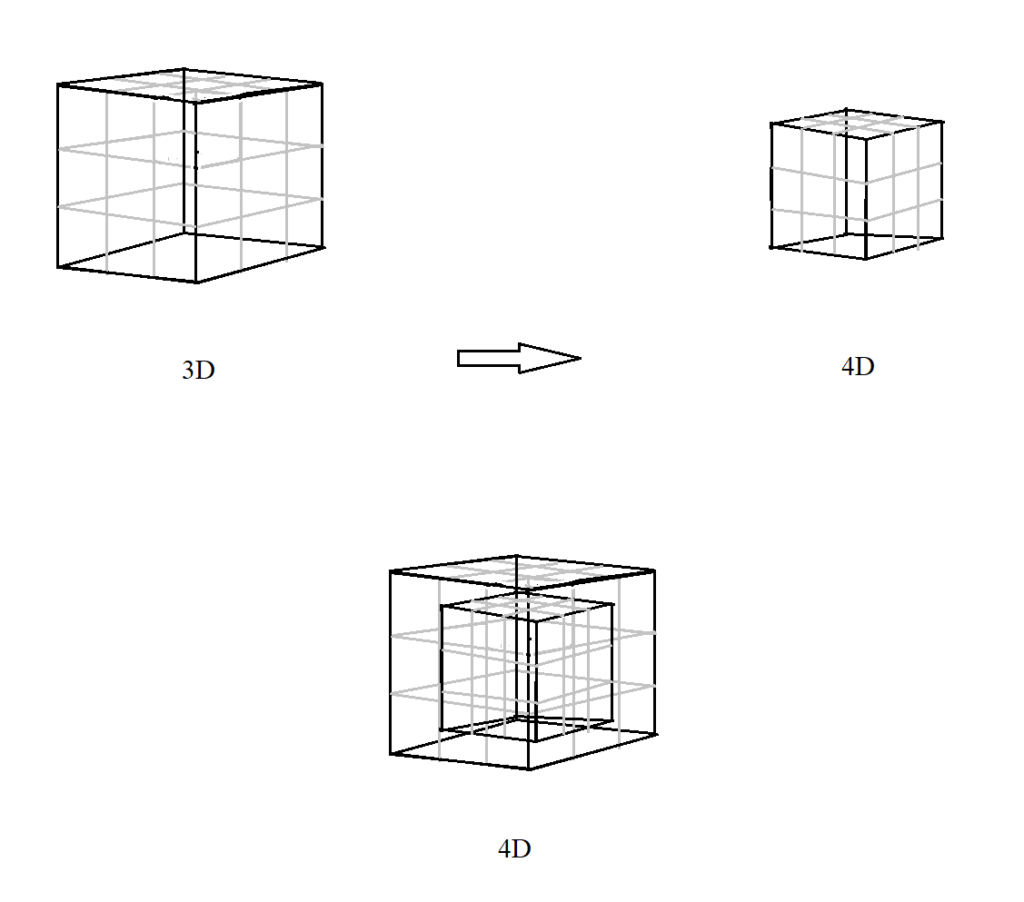
3D expands into 4D through the in and out coordinates of information. Information and interaction located in the third dimension is transferred to be processed by the mind and thought of the fourth dimension.
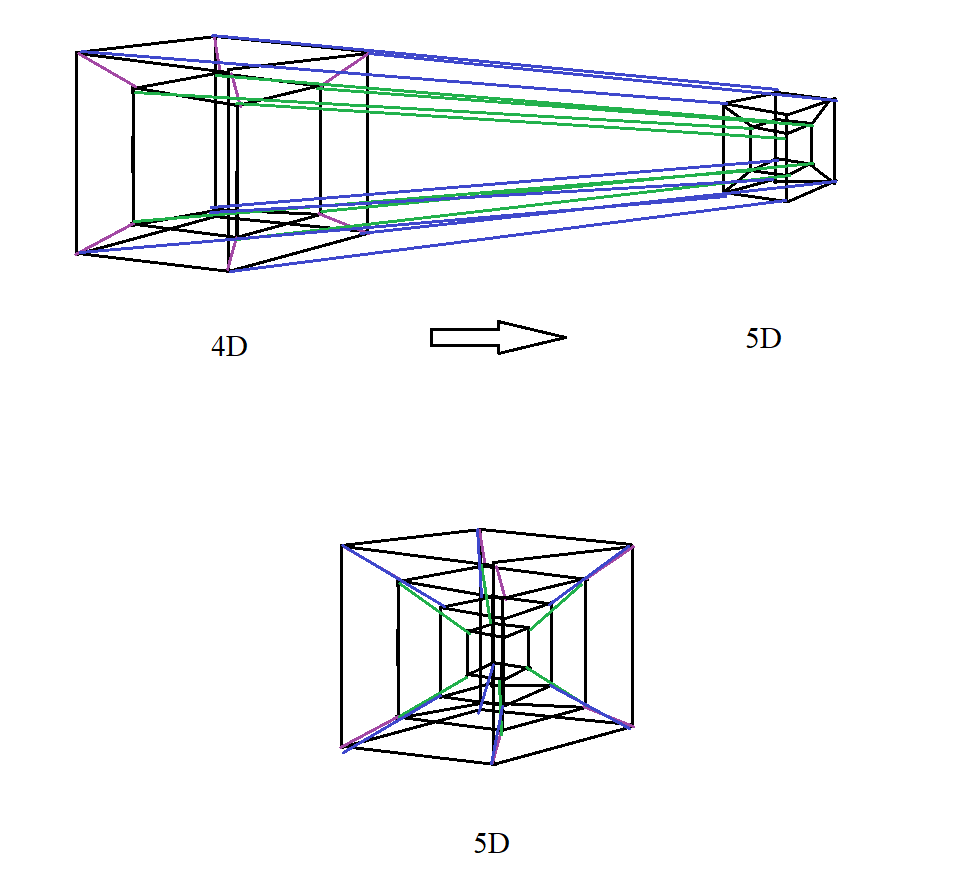
When 4D mind and thought are brought into the view of fifth dimensional consciousness, 4D expands into 5D. 5D consciousness views both third dimensional information and interaction, as well as mind and thought.
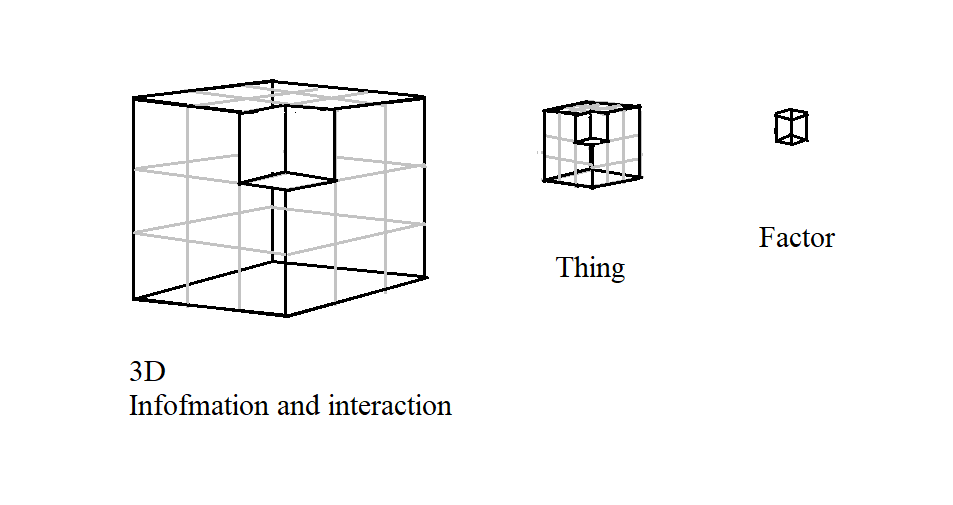
3D information and interaction: Things
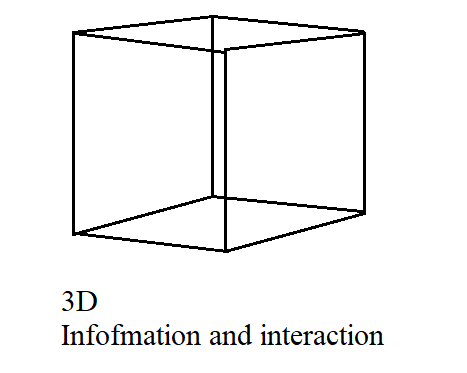
Our three-dimensional reality is made up of events and things. Things can be various manifestations, such as people and animals, or objects and physical forms. These things make up a whole that we call reality.
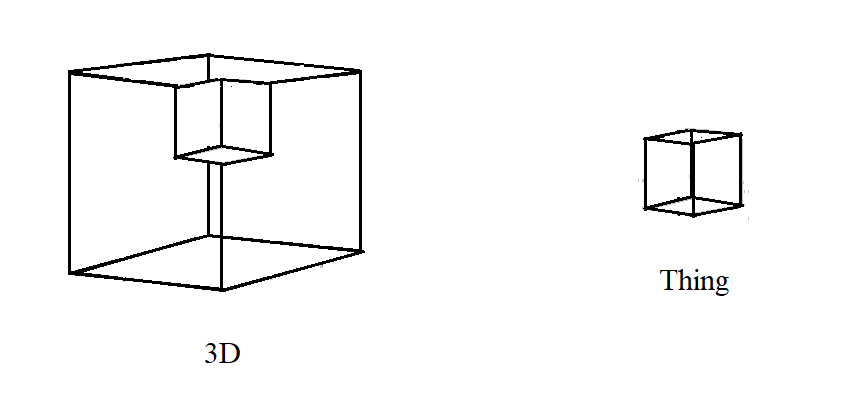
Things also have different properties, which in this case are called factors. Different factors can be, for example, properties or variables.
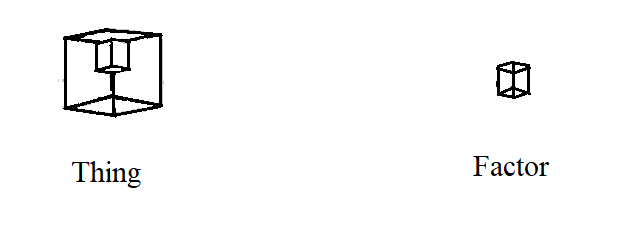
Our reality could appear very chaotic without rules, but our reality is based on rules and facts that are unchanging. That is why our reality also appears consistent. Things follow rules, such as the various laws of physics or biological mechanisms and processes.
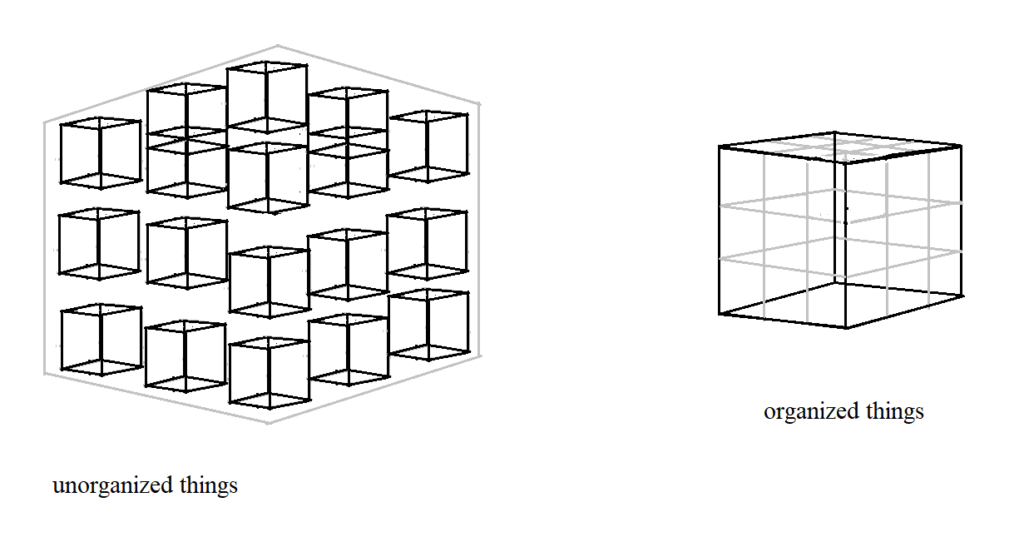
Our three-dimensional reality therefore consists of a systematic structure, in which the whole is made up of things and the factors that influence them.
4D, Mind and thought; thought structures
We interpret our three-dimensional reality through the mind’s thought, the fourth dimension. Information from the third dimension flows in and out along the coordinate for processing by the mind and thought.
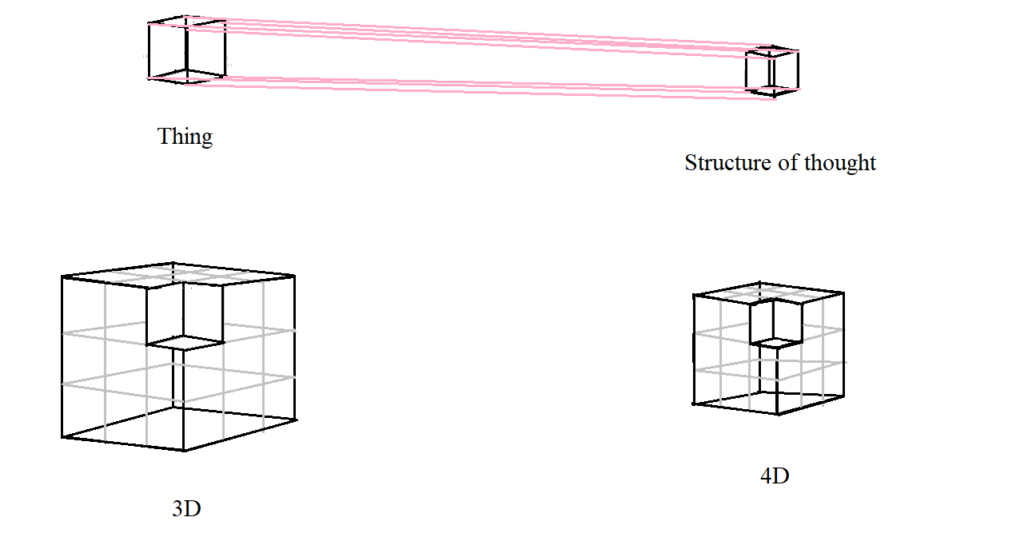
Mind and thought are the mental equivalent of the third-dimensional reality. Whereas in the third dimension there are things and factors, in the fourth dimension things correspond to thought structures, and thought structures are formed by factors that influence thought structures, such as attitude or consistency.
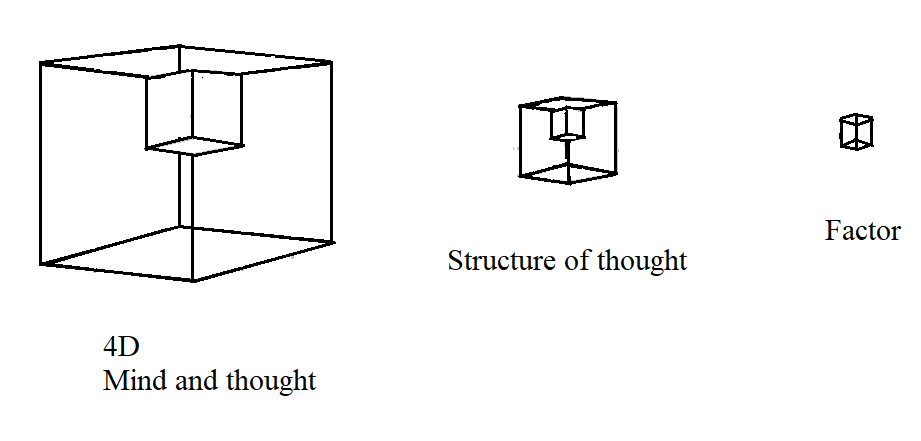
Thought, however, is not based on the same regularity as things in the third dimension. However, the mind can be organized and coherent.
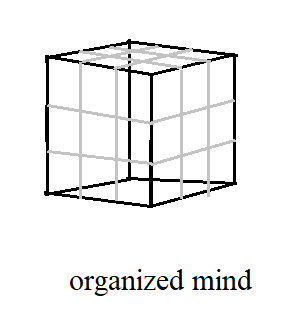
The mind is therefore made up of different thought structures, and thought structures are made up of different factors.
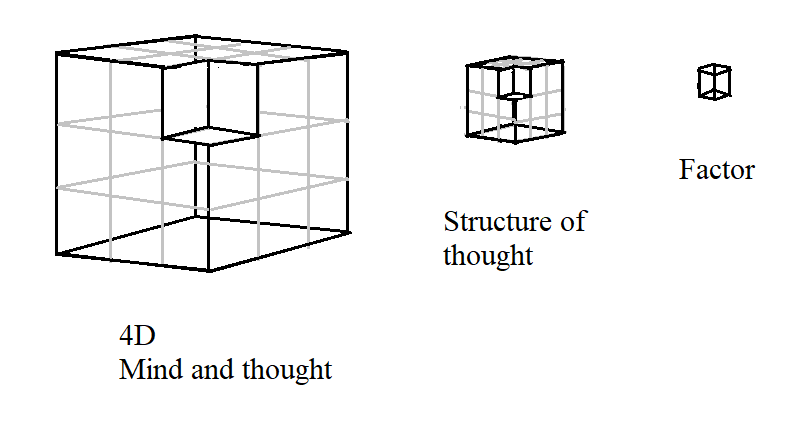
three-dimensional reality thus expands into a fourth dimension with mind and thought. These identical cubes, although representing different properties, together form a tesseract.
The counterpart of things in the third dimension is therefore a thought structure in the fourth dimension. For every thing that manifests in reality, there is a thought structure. These thought structures are created through childhood. They have the opportunity to be developed and shaped, and to be formed into something more coherent, truthful, and clear.
When we think of contradictions, they usually arise from the fact that thought structures do not correspond to the true nature of things.
The role of consciousness is to examine both the mind and thought, as well as the three-dimensional reality. Consciousness experiences these third-dimensional events and things, and examines the thought and interpretation of the third-dimensional reality created by the fourth-dimensional mind and thought. This therefore creates a role that examines whether the third-dimensional information and the thought structures created from it correspond to each other.
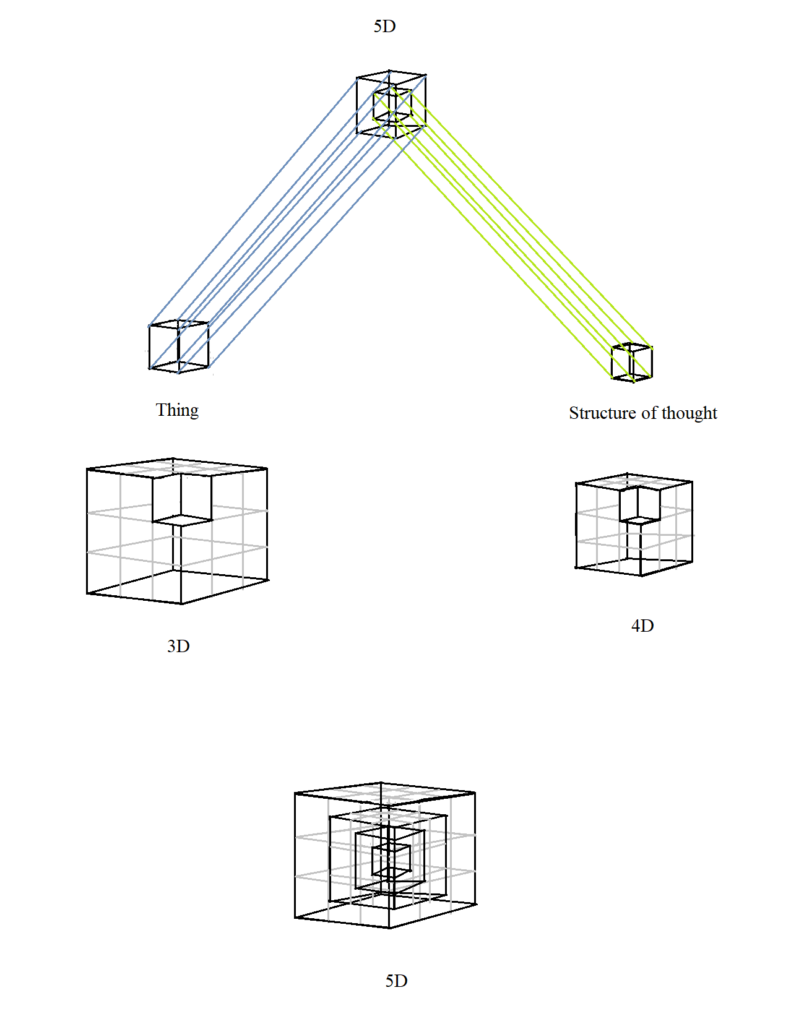
This model updates the diagrams presented in the Inside the Cube thesis and Hypercubism, Part II –documents. More detailed justifications can also be found in those documents.
Download this document from below:
THEORY OF HYPERCUBISM
Multidimensional Art Theory
Theory of Hypercubism is now published as one article. Document includes Hypercubism, part I, Hypercubism, Part II and Hypercubism, part III -articles. Hypercubism is now complete multidimensional art theory with manifesto and philosophy, axioms, principles and diagrams, but also with artistic application and analyzes about hypercubist paintigs with diagrams.
You can download full pdf -document from link below:
Lataa Hyperkubismin teoria pdf -tiedostona suomeksi täältä.
HYPERCUBISM PAINTED STUDIES
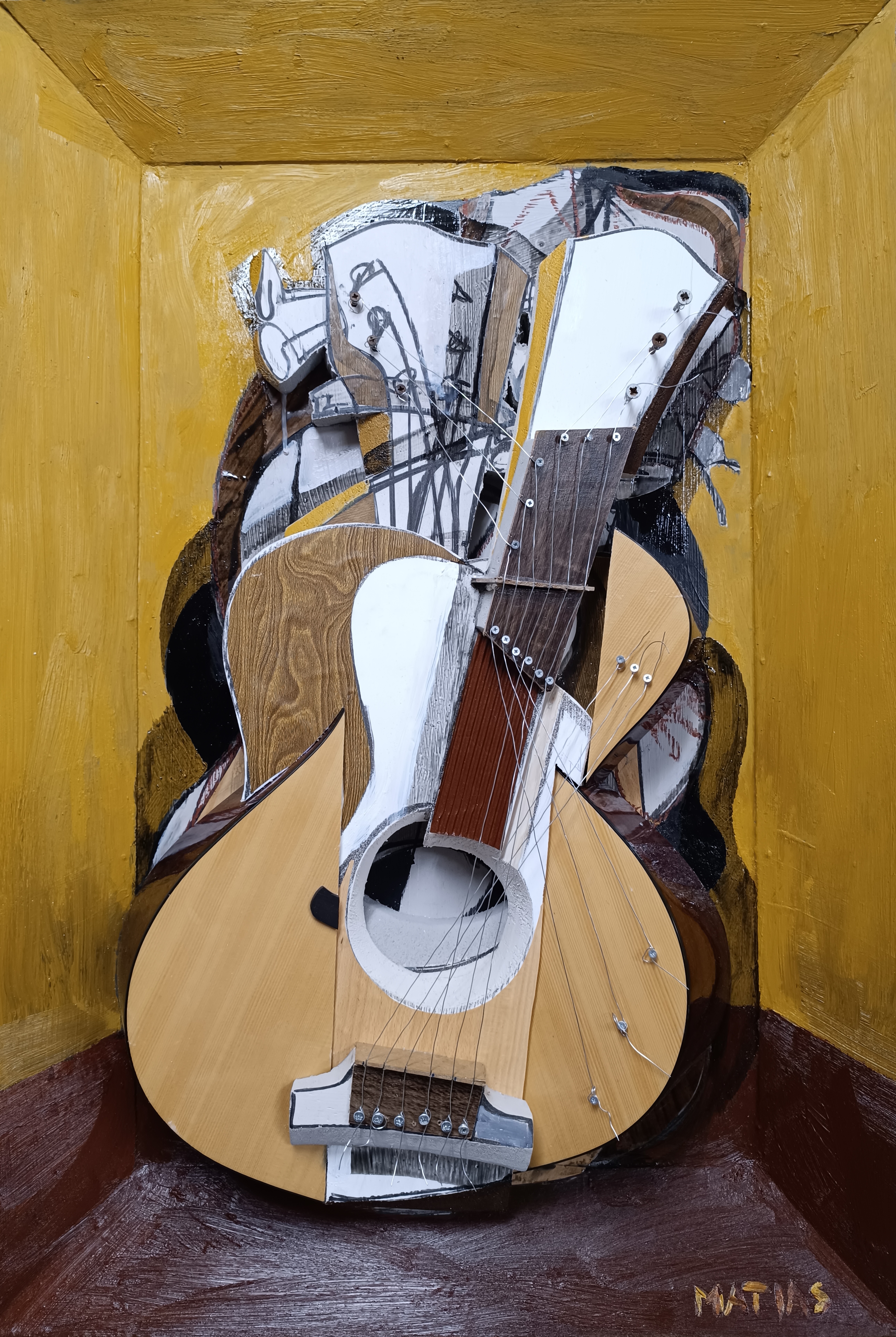
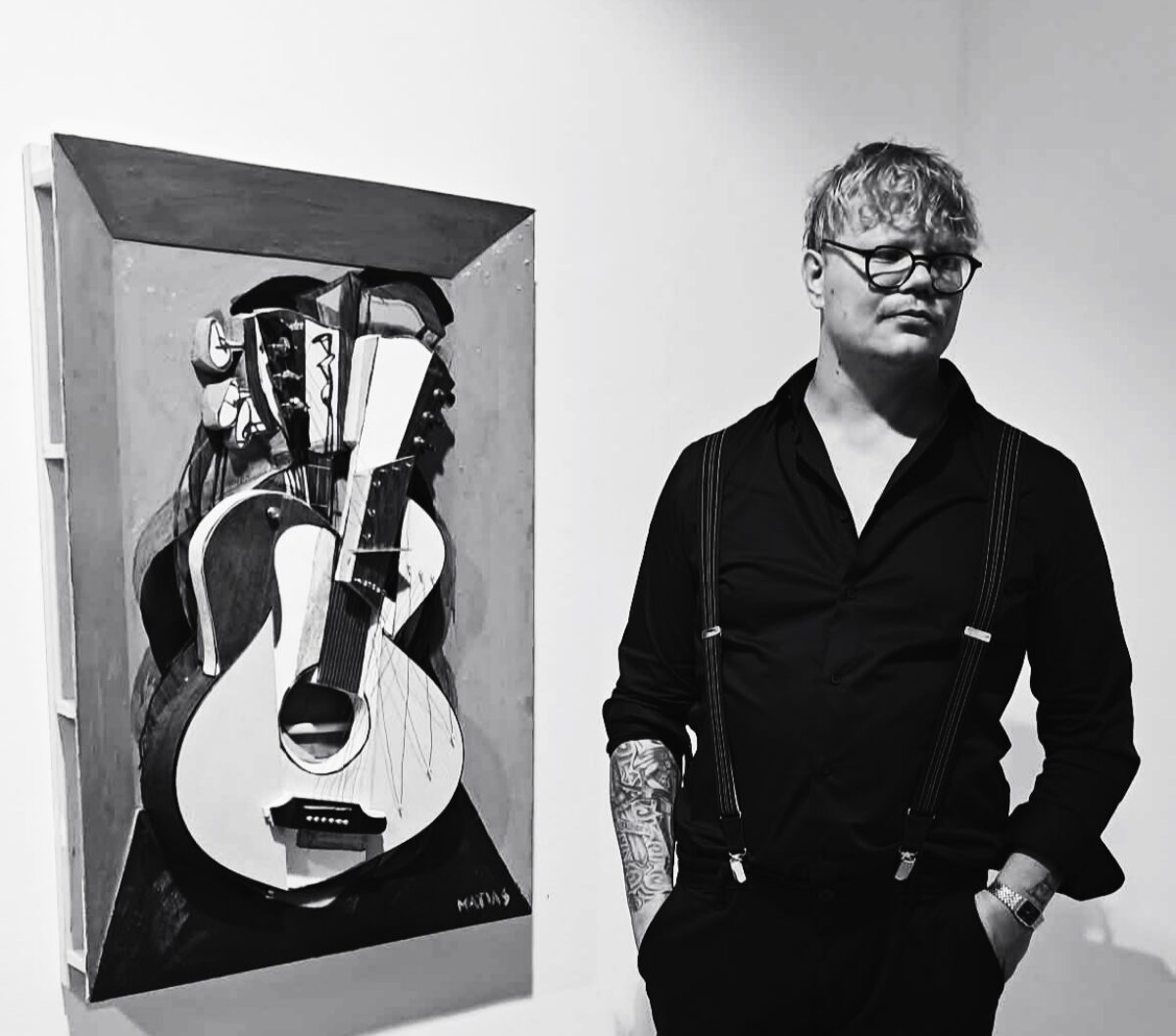
Guitar II is one of the first hypercubist paintings after manifesto was published. Check this Guitar II– studie and other Hypercubist painted studies from here.
POLYTOPISM MANIFESTO BY OCTAVIAN IORDACHE
Polytopism Manifesto presents high‑dimensional polytopic thinking, in which artistic, technical, and cognitive processes are structured through the levels 0D–8D. The manifesto describes how different artistic movements such as pointillism, stripe painting, neoplasticism, and hypercubism form a polytopic developmental line. Hypercubism is placed within this continuum at the 4D level. The document is based on Octavian Iordache’s polytopism and his Springer publications (2022, 2024).
You can download Polytopism Manifesto as PDF -document from below:
SHOP
Here you can explore Anssi Matias´s new hypercubist paintings and older production, wich are all for sale!
