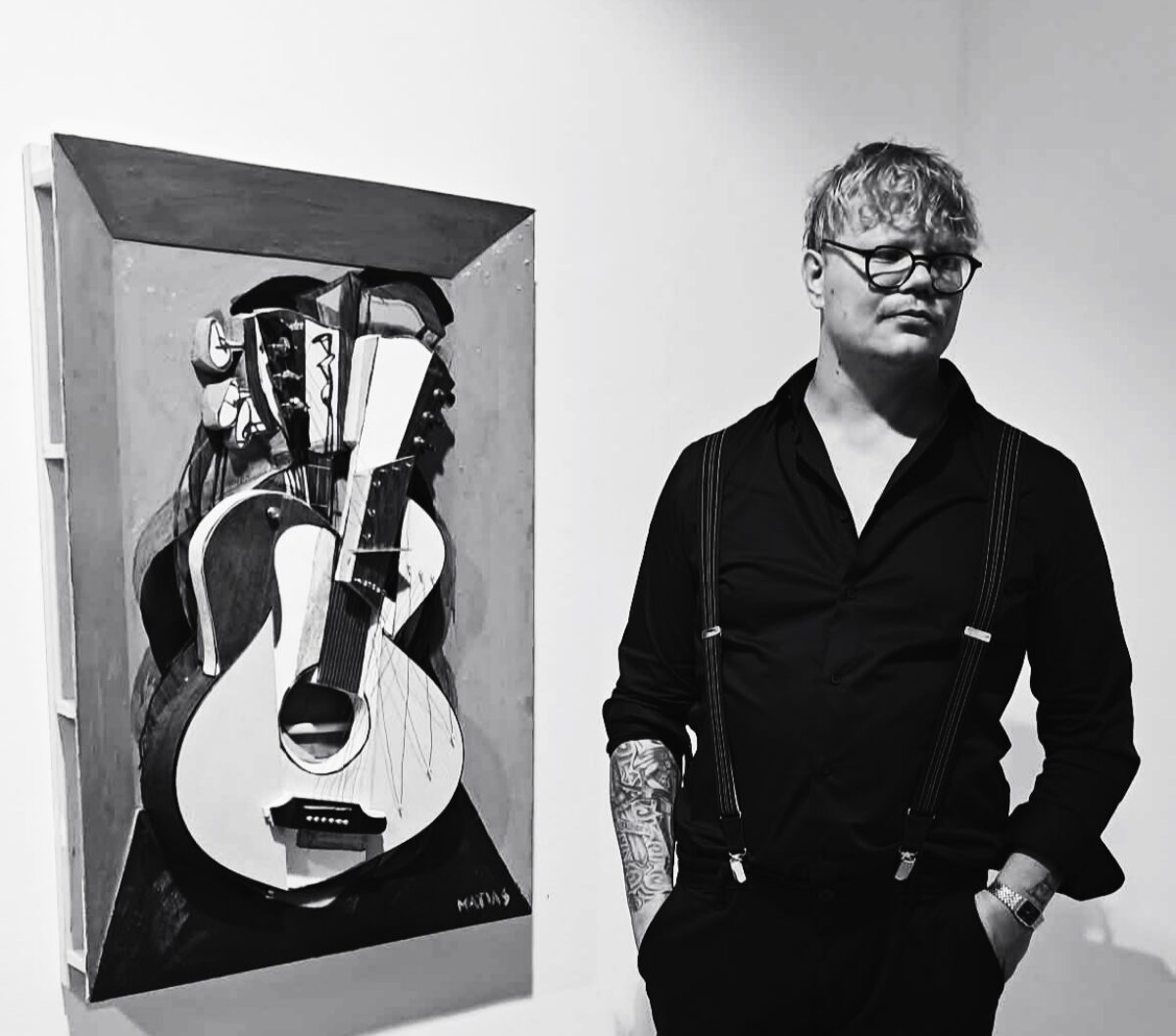
My research into Cubism has been both conceptual and painterly since 2020. In my thesis, I have writtenInside the cube,2024 for a comprehensive explanation of this process.
”Studies in Cubism; dimensions speak
My interest in Cubism arose when I became acquainted with the early Cubist works of the old masters, such as Pablo Picasso (1881-1973) and Georges Braque (1882-1963). I had certainly come across Picasso’s works in various situations before, but they began to manifest themselves in different ways during the early years of introspection, when my interest focused on the broken and reconstructed vision of the object to be painted. This prompted me to study the theory of Cubism, which in turn led me all the way to thinking, but also to the study of the fourth dimension. Picasso is known to have studied the theory of relativity, but he is also known to have said that he painted forms as “he thinks them, not as he sees them” (Bergström, 2015, p.332). I think he perfectly depicted the fourth dimension of mind and thought in his Cubist works.
I was also strongly attracted by the geometry of the works, where the image that initially seemed very inconsistent and confused became very consistent and clear through the study of the theory of Cubism. The works were like a riddle, which with the help of the mind and thought could be transformed into clear wholes. I remember our painting lecturer Petri Rummukainen saying that the goal of the Cubists was also to create a living image on a two-dimensional surface, and I think they have partially succeeded in this. The image begins to live in the mind and thought of the individual through the study of the theory and the work. In Cubism, the works were also logical and truly ingenious with their compositions and arrangements, where the subject could be seen from many different perspectives simultaneously with the help of the mind and thought.
In my research, I perhaps immersed myself too much in the term cubism. My painting lecturer Rummukainen also said: “Don’t fall in love with that cubism”. That’s what happened to me, or I myself experience it as more of an obsession than a love. It’s easy to study the theory of landscape painting or, for example, to understand the influential causes and factors of abstract art, but cubism offered me an endless swamp in which to immerse my thoughts and energy. Studying cubism brought much-needed challenges and problems for my thoughts to solve. Having spent my time studying the fundamental theory of the style, both by reading, reflecting on and painting, I have been able to build a satisfactory understanding of the subject for myself.
Exploring Cubism through Paintings
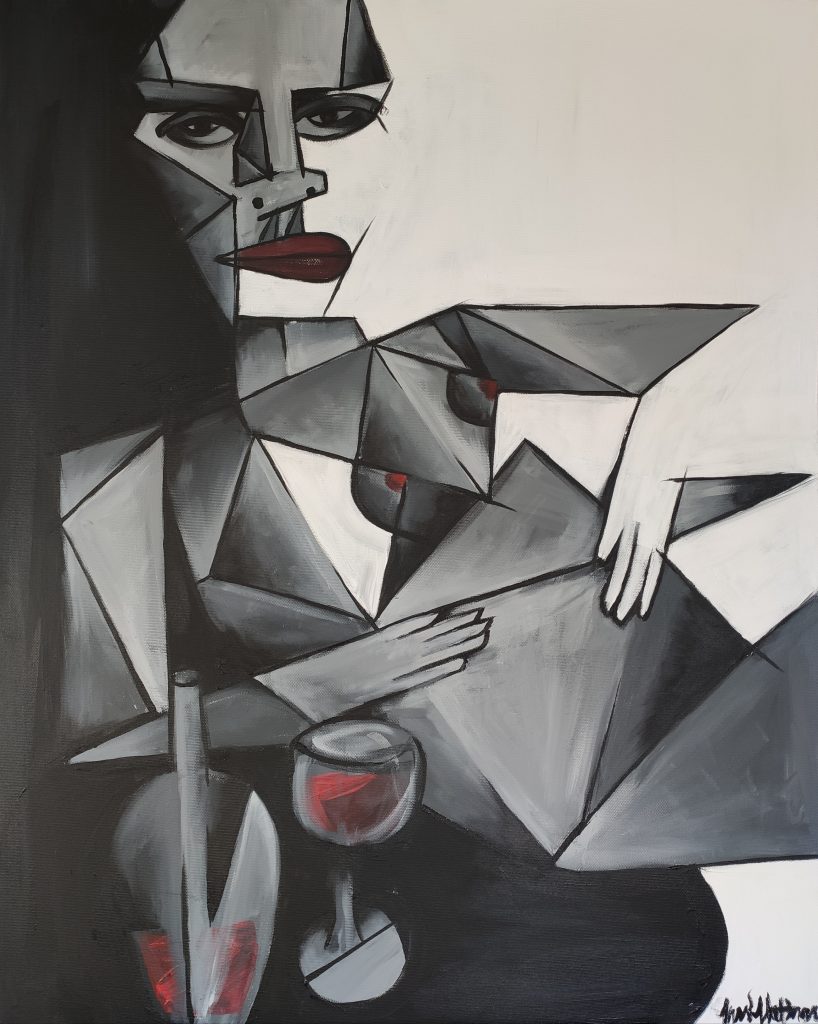
My research into Cubism has been very strongly connected to painting, in addition to working on ideas. I painted my first Cubist works in the spring of 2020. The works Self-Portrait, 2020, Unnamed, 2020, and Woman, 2020, were painted while I was still living in Roihuvuori, Helsinki. My Cubism at that time was experimental, mixing my previous style of painting three-dimensional shapes, but also the formal language of my previous figure paintings.
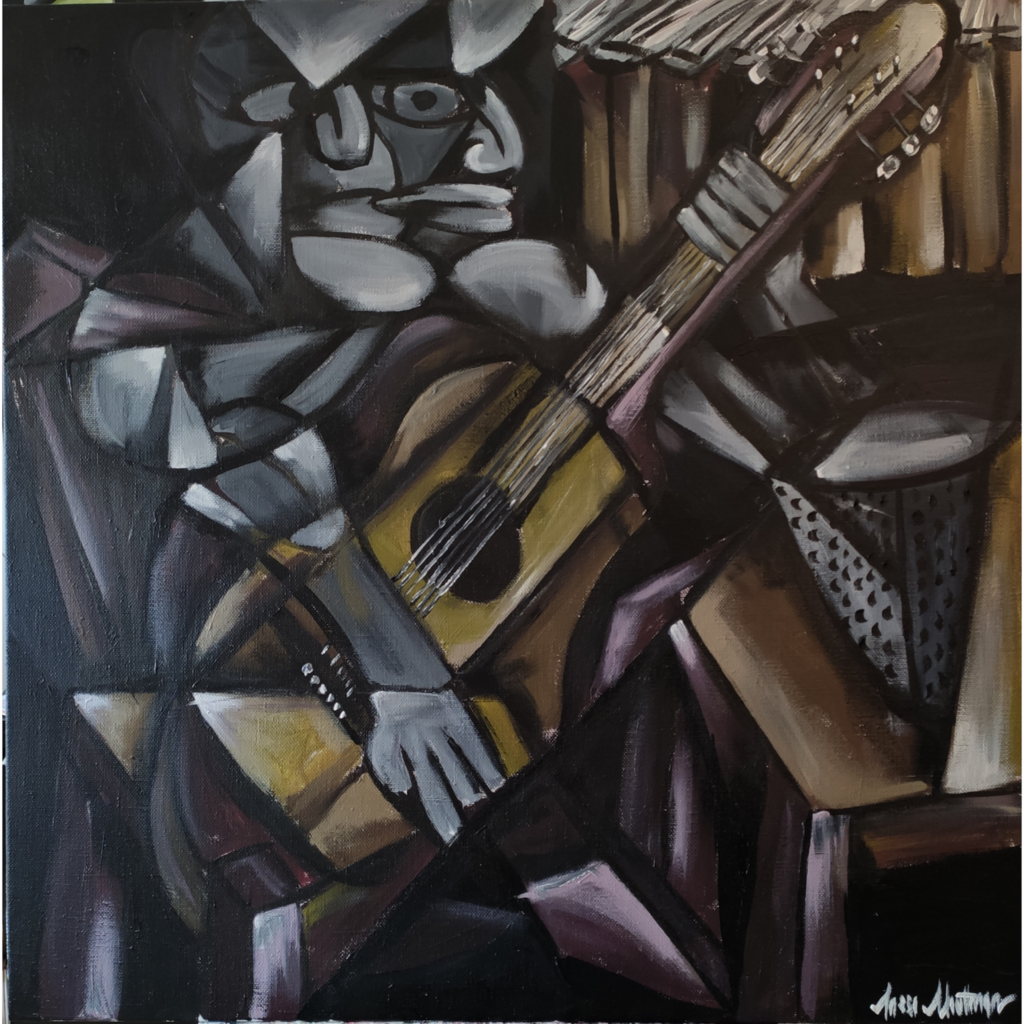
My studies began at Kankaanpää Art School in August of the same year, where I moved during the summer. The first year was spent between courses, doing my own work, whatever I could from school. I didn’t have my own workspace then either, so I painted what I could in my studio. The paintings Chessboard, 2020, Guitar, Bag, Chair, 2020, and Self-portrait, 2020, were created during the summer before school started. The ochre and gray tones in the works stemmed from the color scheme of analytical cubism.
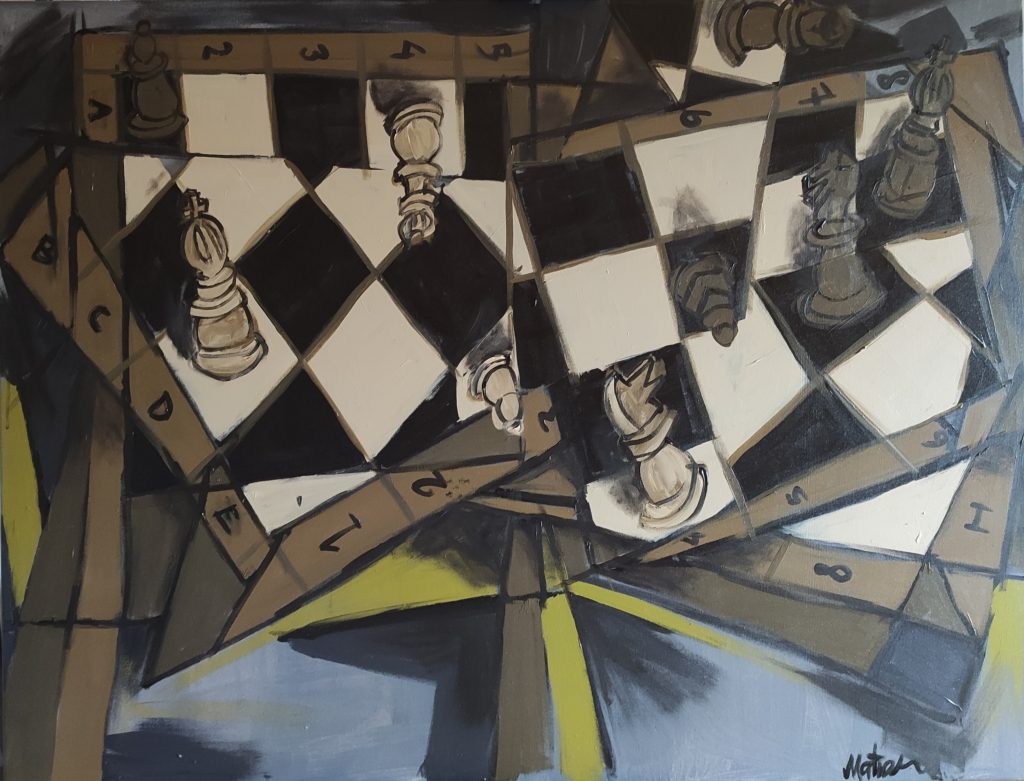
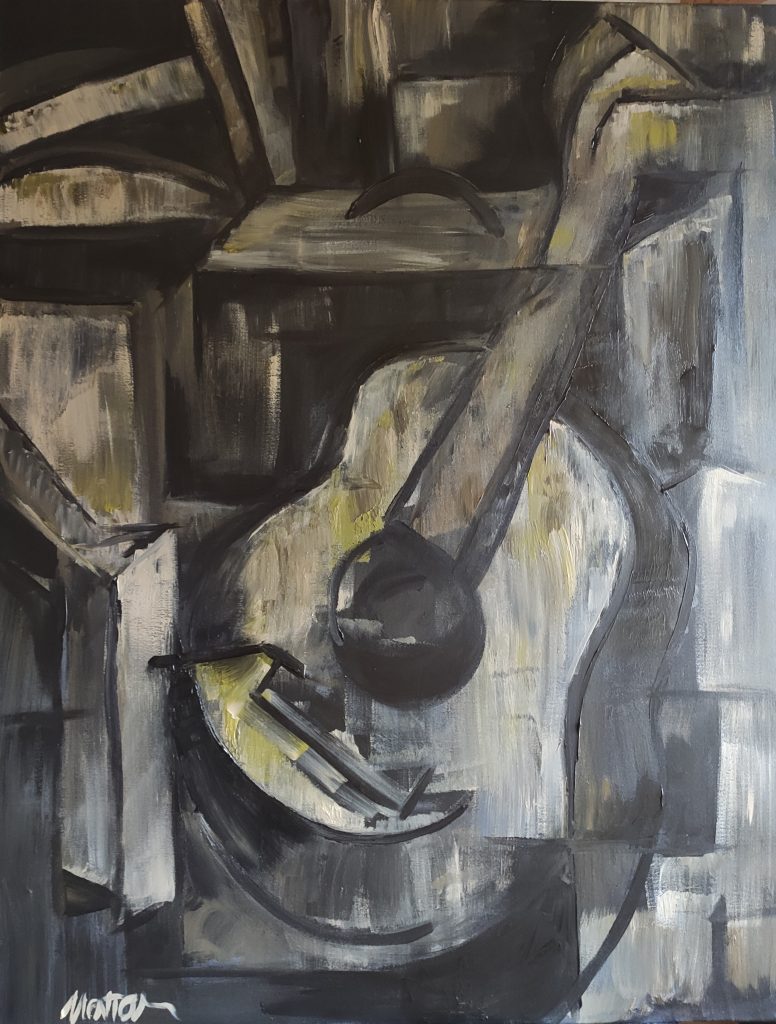
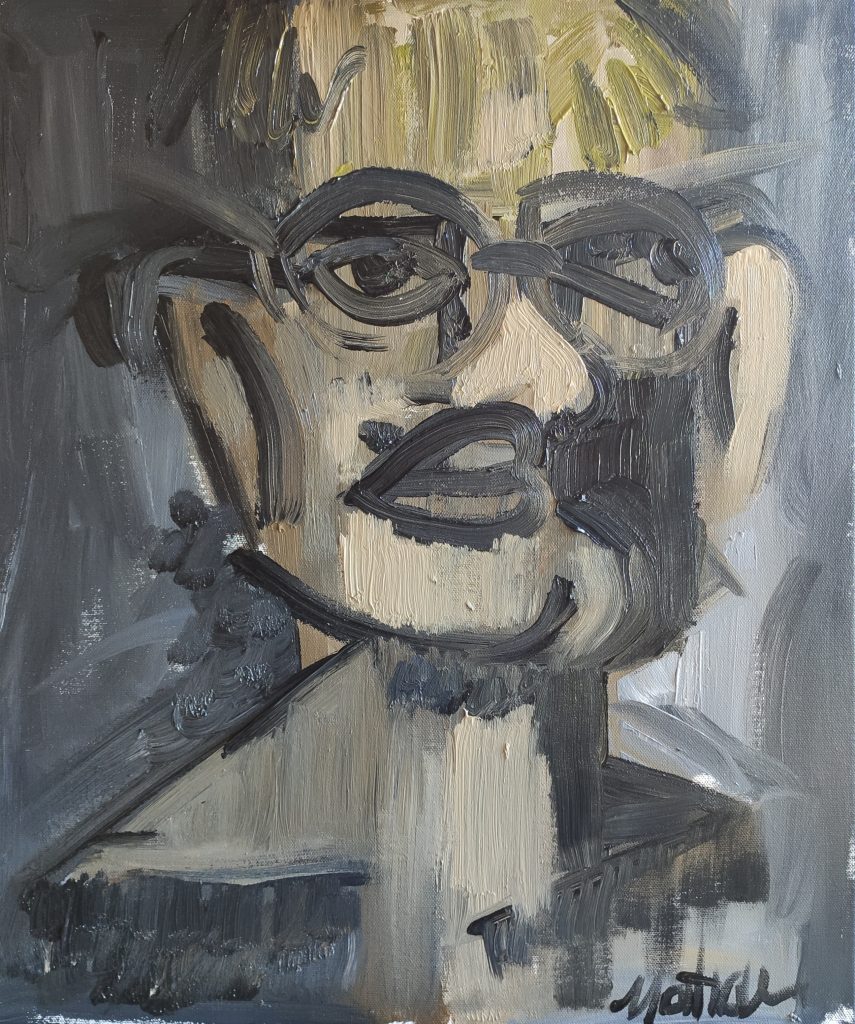
The coronavirus pandemic that had shaken the world had limited people’s sightings and activities, closing the school and restaurants in Kankaanpää in the spring of 2021, when I decided to go to my friend in Helsinki. At that time, I painted the work Saxophonist, 2021.
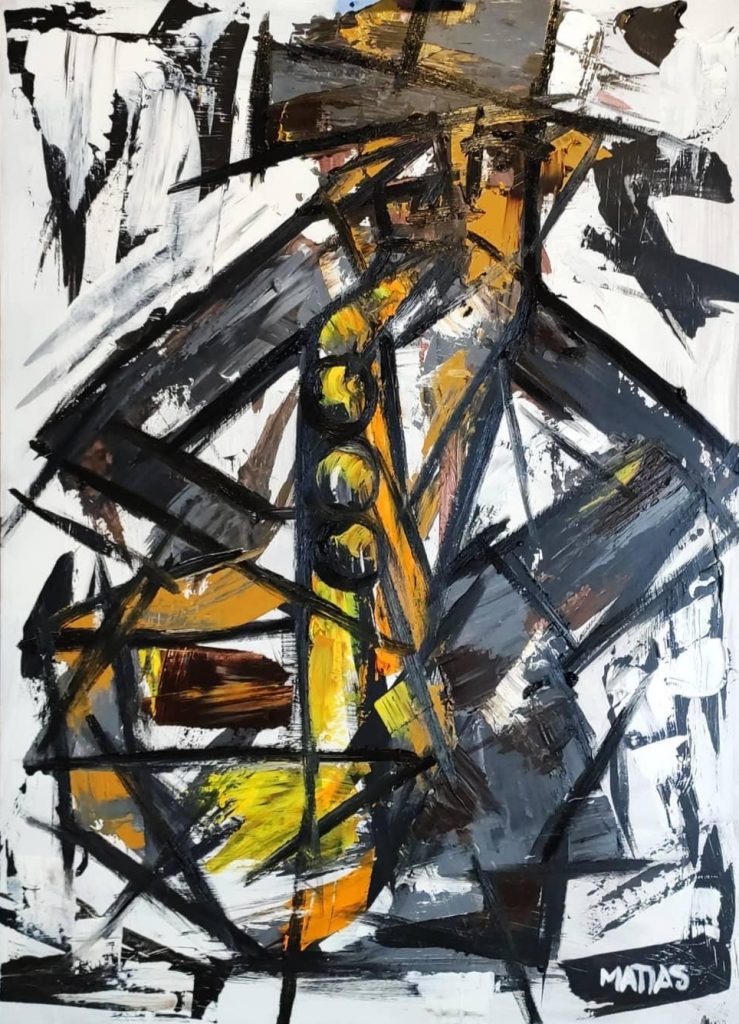
During the summer, for a change, I painted landscapes of Helsinki, which I also put together an exhibition of in a small café in Punavuori in the summer. The landscapes were impressionistic depictions of Helsinki landscapes instead of cubism. In late 2021, I started using collage in my cubist works. I glued newspaper clippings and cardboard to my works to bring structure, but also a message about the era I was living in at the time. The corona pandemic was at its strongest with its restrictions, and at that time working alone was allowed in school premises, otherwise everything was pretty much closed. The first collage works Home, 2021, Unnamed, 2021, and Guitar, 2021, personally represented a new approach to working.


In 2022, the paintings Helsinki cathedral, 2022, and Studio view, 2022, continued the same theme, and wallpaper also became one of the materials used in the painting. In the summer of 2022, I also had the opportunity to participate in the Art Nordic 2022 art fair in Copenhagen, where the works in question were on display over the weekend of June 24-26, 2022.


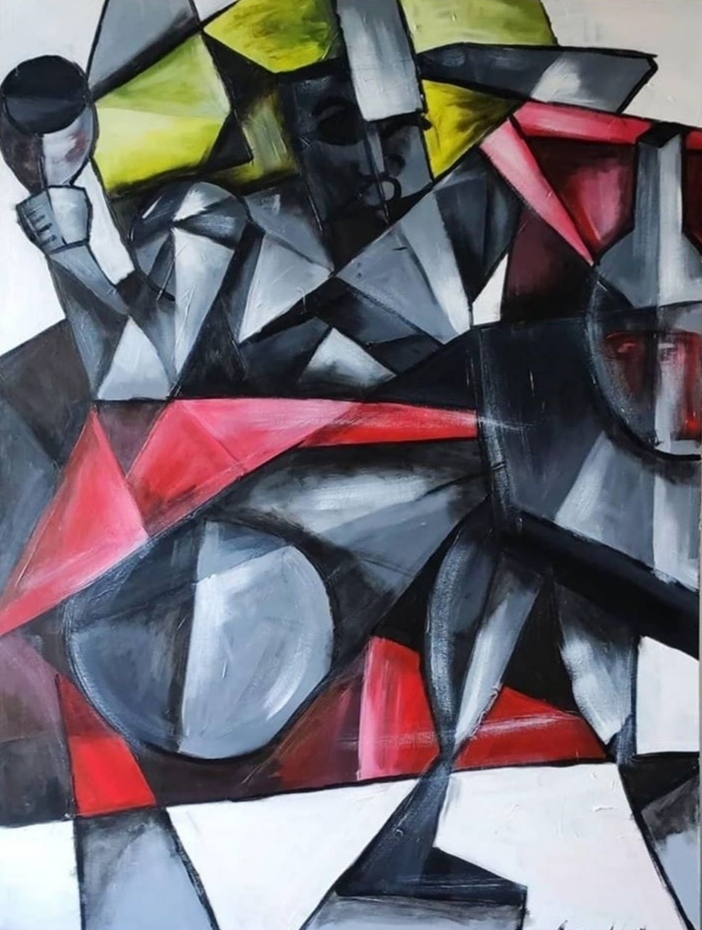
During the summer I tried to go even deeper into my cubist work. During this time I was thinking about the theme of the fourth dimension, and the concept of hypercubism was in my mind. I will return to this topic in more detail later. My goal was to find a way to create one more dimension on top of traditional cubism. Whiskeybottle, glass and chessboard, 2022, Whiskeybottle, glass, chessboard and guitar, 2022, and Whiskeybottle and glass, 2022 were my studies of different arrangements from my workspace.


Later I made even larger studies, where I tried to fragment the observation while still leaving something concrete in the space, such as a vase or a coffee pot. Morning table, 2022, Bowl on the table, 2022. In these works I also used old sheets as a collage element.
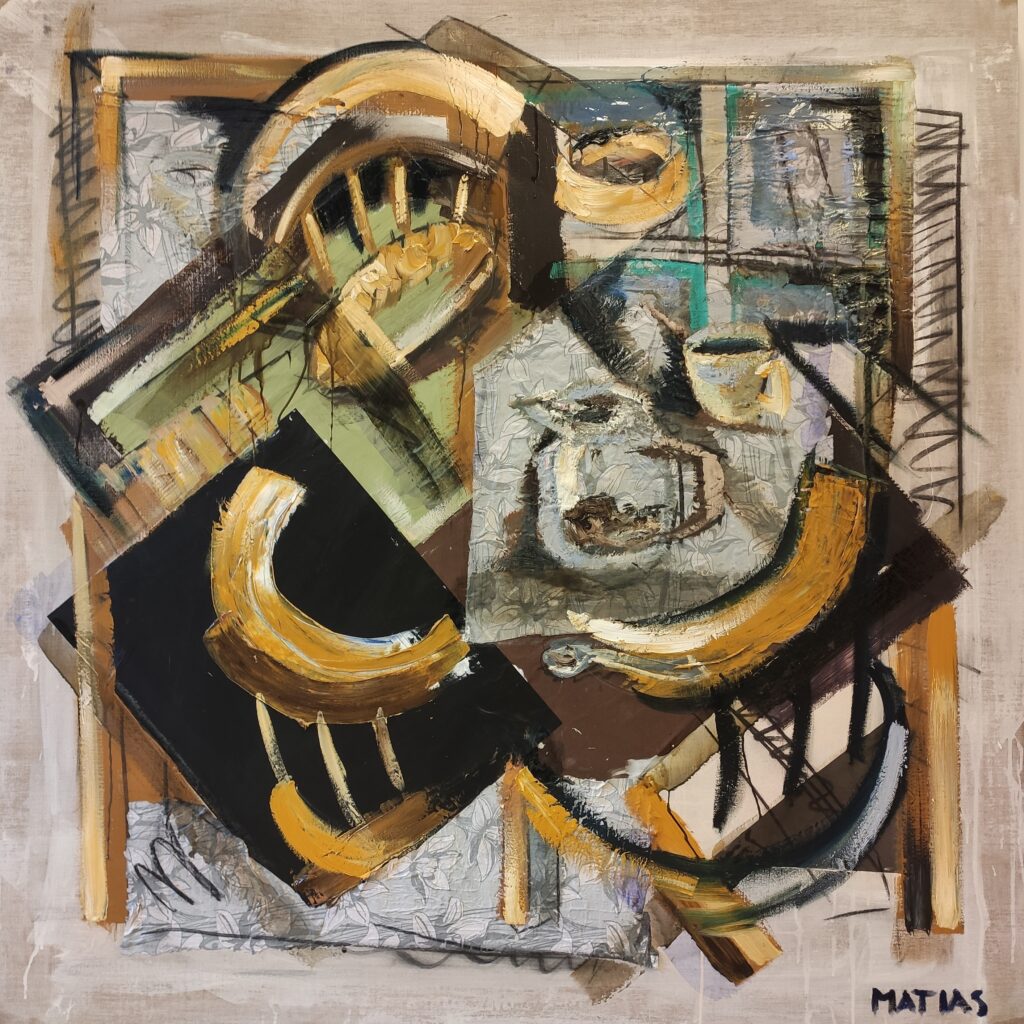
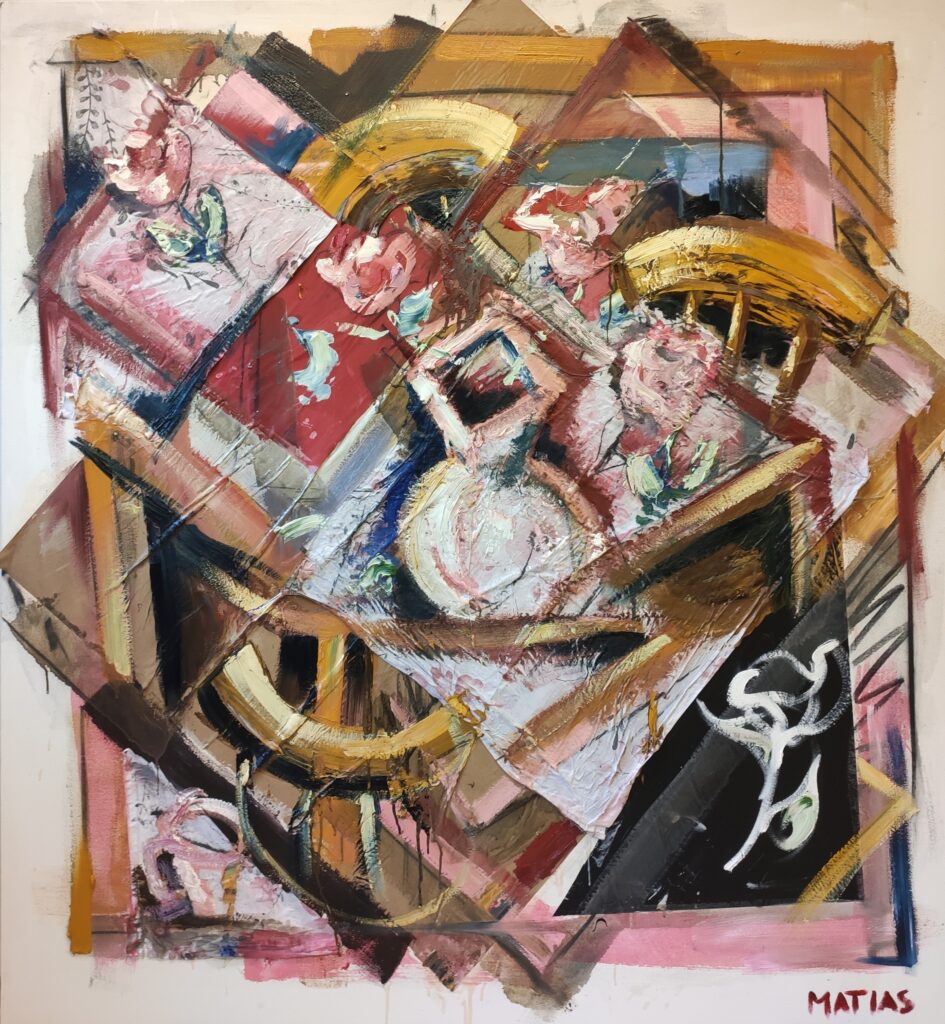
Autumn 2022 was spent preparing for my exchange studies, which started in spring 2023 in Prague at the local Academy of Fine Arts, AVU (Akademie výtvarných umění). When I presented my work to my studio professor Petr Dub (b.1976) and other students, Dub asked me, “Why are you painting hundred-year-old works?” The students also wondered if I could do something else. This pushed me into a personal crisis, and for a couple of months I wondered how to really take my work in my own direction.


The first studies of lighter lines and reduced use of colors were created in my rented room on Mikulándska during the spring. The works Chair, table and empty frames, 2023, Night table, lamp and bowl, 2023, and Smoking man on chair, 2023, were the first works representing the new style. These were reduced to only faint background colors made with ink, outlines made with charcoal, and shadows made with oil.


The later paintings Winebottle and glass at the table, 2023, Flower at the table and chair, 2023, and Bible on the table under lamp, 2023, were given stronger colors, but the airy still lifes gave me freedom from overly analytical thinking, which led me to enjoy painting again after a long time. I held a joint exhibition of these works with my landlady Katariina Lillqvist, which took place from 2 to 16 June 2023. The works also participated in the end-of-semester exhibition of the local art academy.


When I returned to Finland in June, I started working on new ideas. In addition to the simple charcoal line and simplified color backgrounds, collage returned to the works, and different materials, such as fabrics, wallpapers and pastels used in the finishing, brought even more life and dimension to the works. Flowers at the table, 2023, View from studio, 2023 and Breakfast table, 2023 continued the same simplified theme with small aesthetic additions. The works in this series were on display at Galleria Pori Saskioa from 29.7-20.8.2023.
In this style of painting, I thought I had found a way to depict the mind and thought of the fourth dimension in the form of delicate outlines of still lifes and objects, around which a clear three-dimensional structural reality was formed. I had already heard from an acquaintance about an acoustic board made of peat, which would be easy to work with by carving and which would also be possible to paint on. For the next ensemble, I ordered the materials and began painting a series that later became known as Silenced acceptance. The works in the pictures are Euphrates has dried, 2023, Only for fans, 2023 and Who shot the pidgeon, 2023.


The works were also purposefully formed into three-dimensional forms in addition to collage and oil paints, which was another step forward in my research. The works also moved away from the theme of cubism even further, which has also been very liberating in retrospect. However, for a few years I was very intensely attached to the idea that I should create some mind-blowing and new cubist style. The works in the series were on display at Galleria Ronga from 11.-30.11.2023. (Miettinen, 2024)