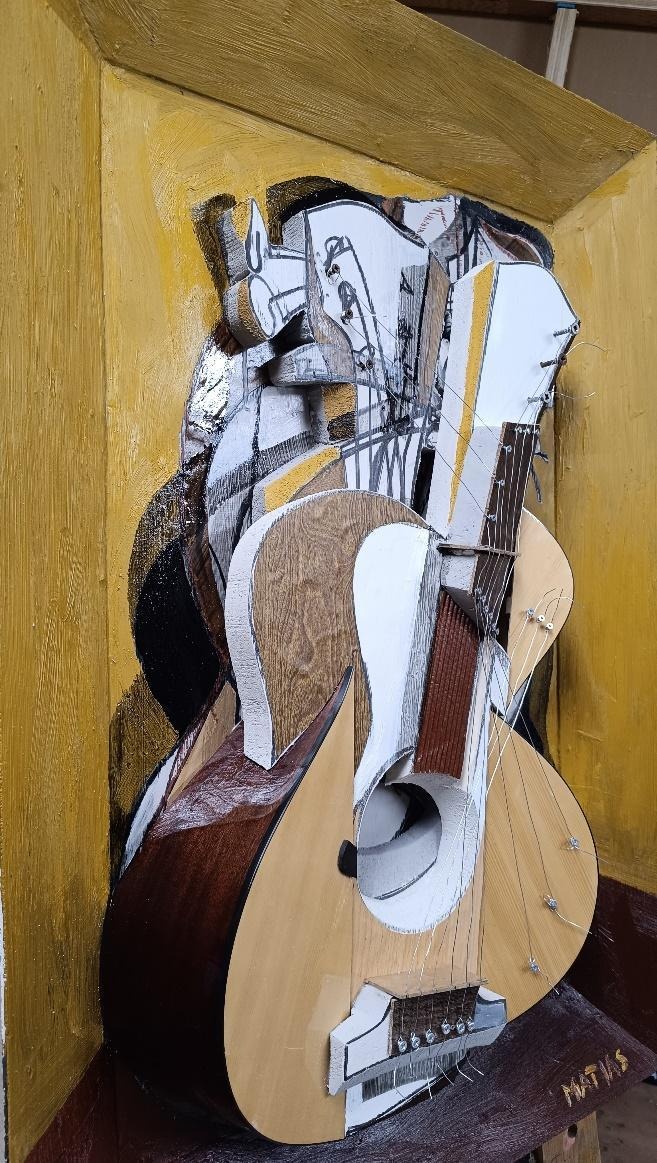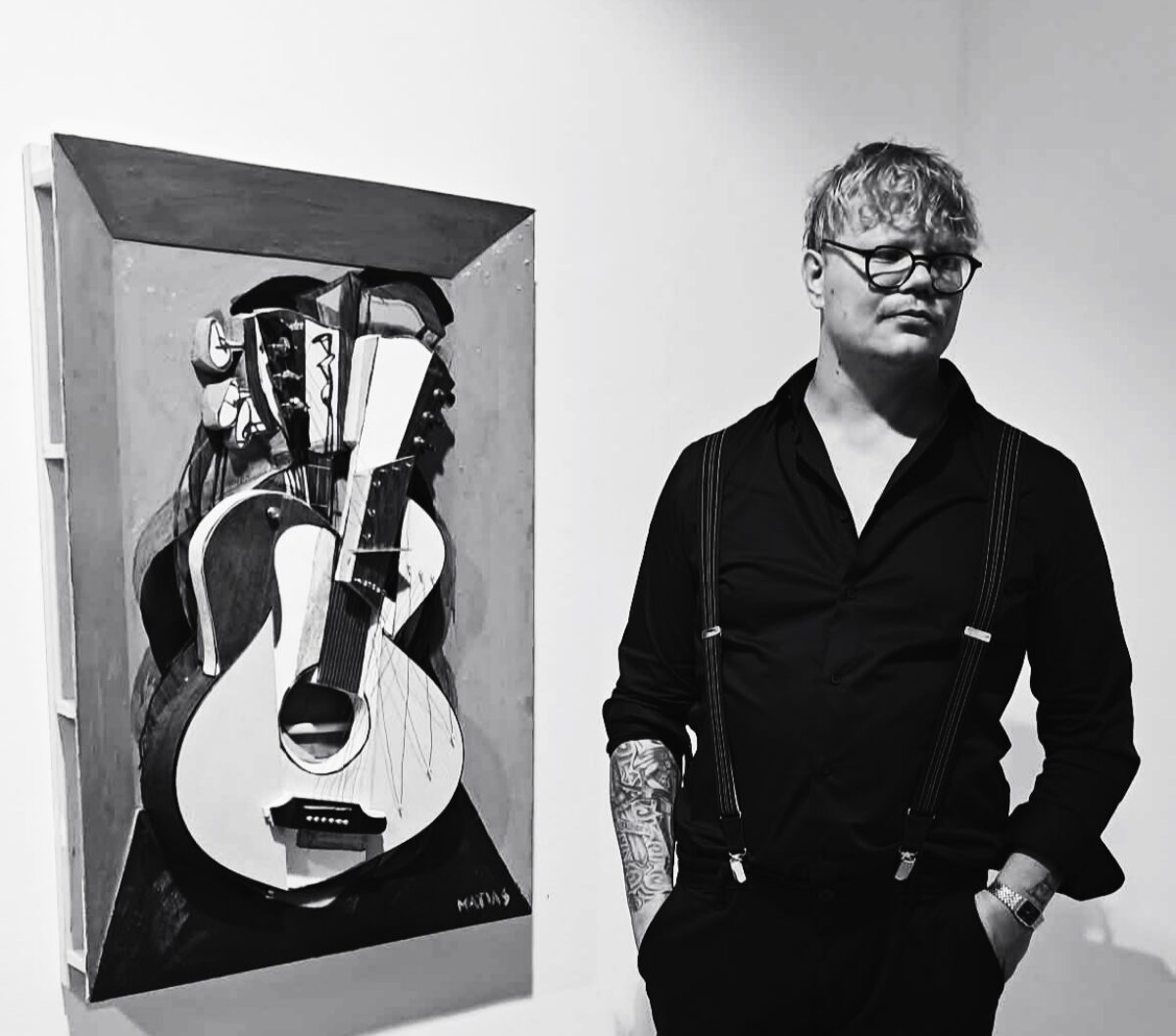
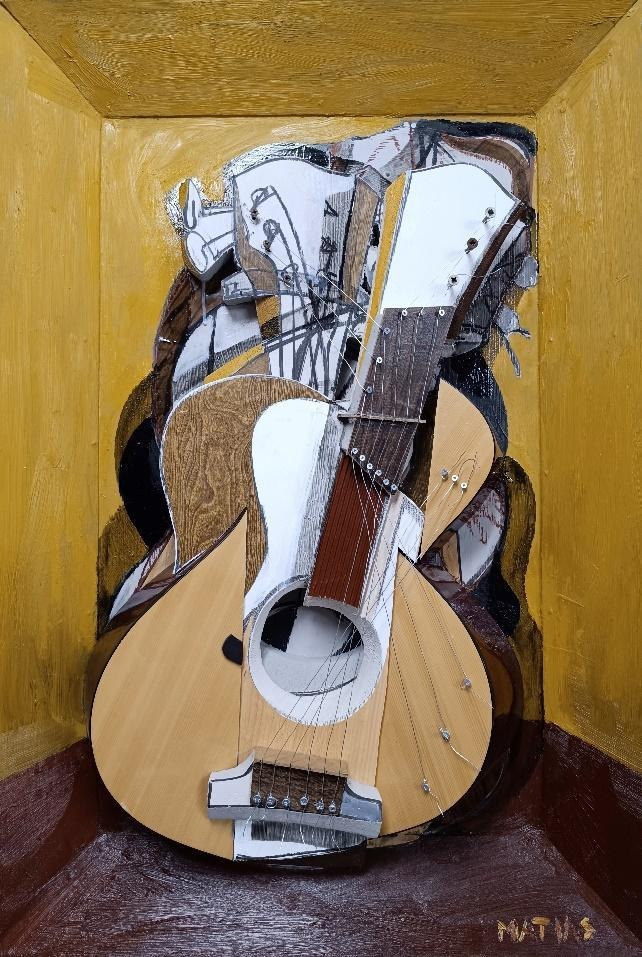
Hypercubist works are based on geometric diagrams. When the aim is to embody the 3D-5D dimensional logic of Hypercubism in the works, it is also important to bring out this structure in the paintings. Hypercubism is not only a written philosophy, but its aim is to bring out this structure of dimensions and interaction in layers according to the philosophy in the works as well. This forms a seamless unity between the written philosophy and the artistic work. In Hypercubism, the truth of the structures also appears as its theoretical background. The paintings are not only manifestations, but they follow the structural logic of Hypercubism.
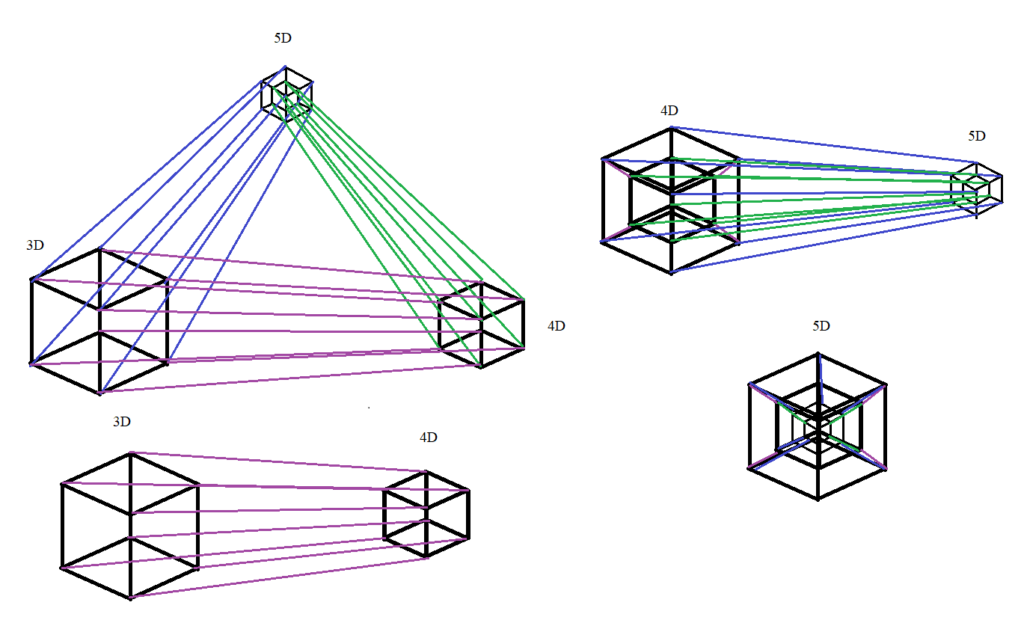
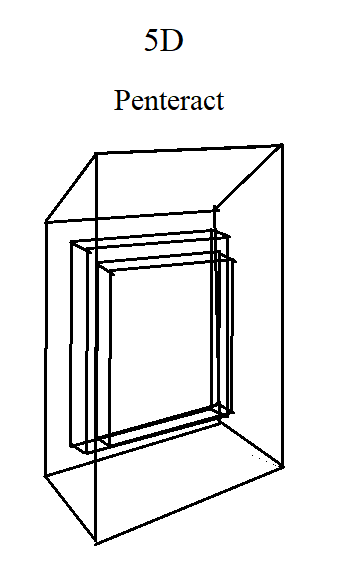
Compromises have been made to produce a hypercubist painterly work. The following diagrams explain how the works are constructed and how dimensions are expressed in them. The aim is to keep the works as paintings, so the perfect geometric shapes have been flattened.
Front view
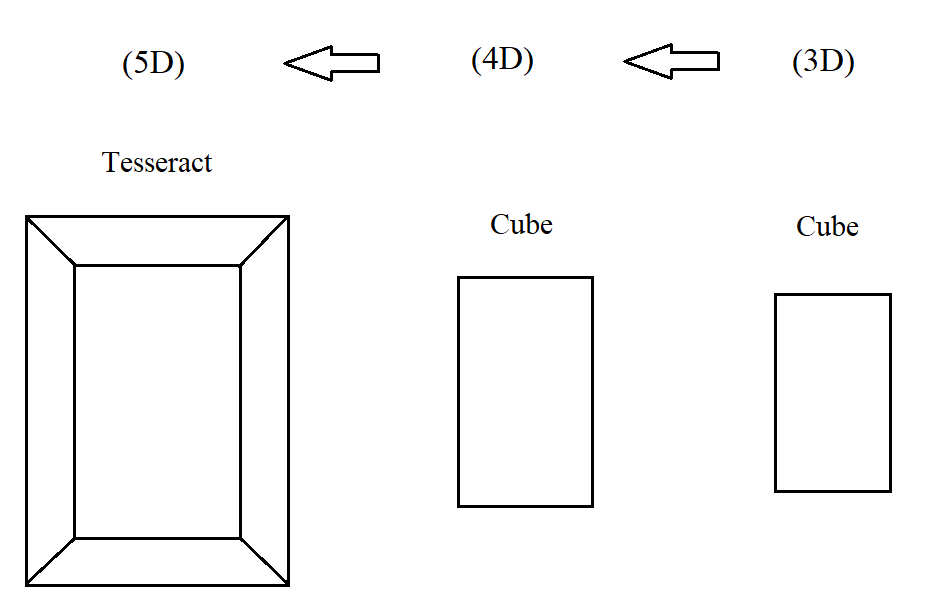
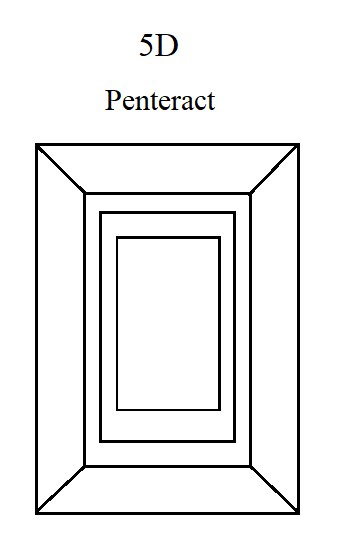
Three-dimensional view
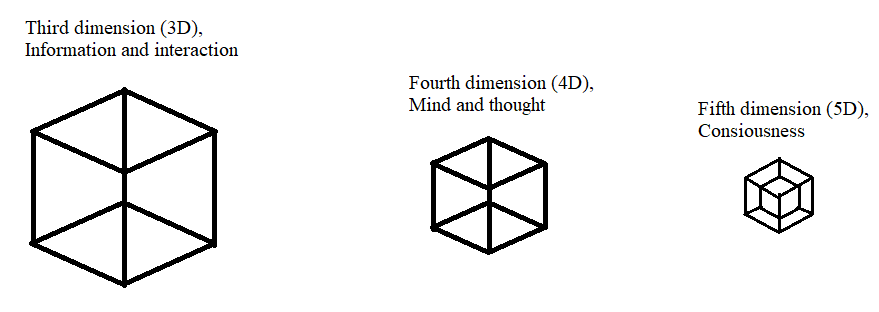
In the philosophy of hypercubism, the tesseract, which represents the consciousness of the fifth dimension (5D), is smaller in the diagrams. However, in the diagrams of a hypercubist work, the 5D tesseract is the largest because it directly embodies the underlying structure of the work physically, but also philosophically. Consciousness serves as the basis for experience, but it also serves as the concrete physical underlying structure for a hypercubist work. After this, the work is built up, gaining a layer of mind and thought (4D) and finally a layer of information and interaction (3D). Together, these layers, dimensions, form the 5D pentact.
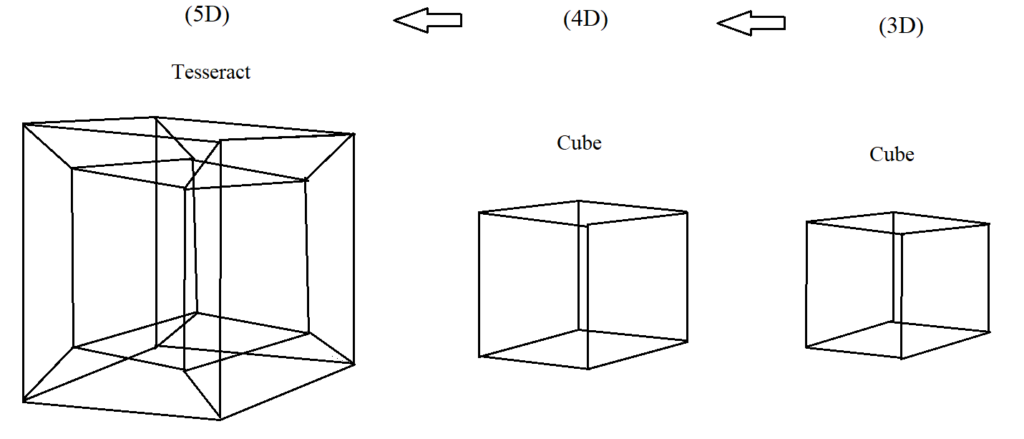
Hypercubist works use a compromise in the representation of geometry. Since the goal is to create a three-dimensional painting with layered structures, it is not possible to depict the subject of study using perfect geometric shapes. Therefore, the tesseract, the base of the work, is depicted in three dimensions as a single wall that is detached from the tesseract. The cubes are depicted as flattened three-dimensional planes. This compromise allows the construction of a three-dimensional painting and the expression of dimensions in a single work, while maintaining mathematical logic.
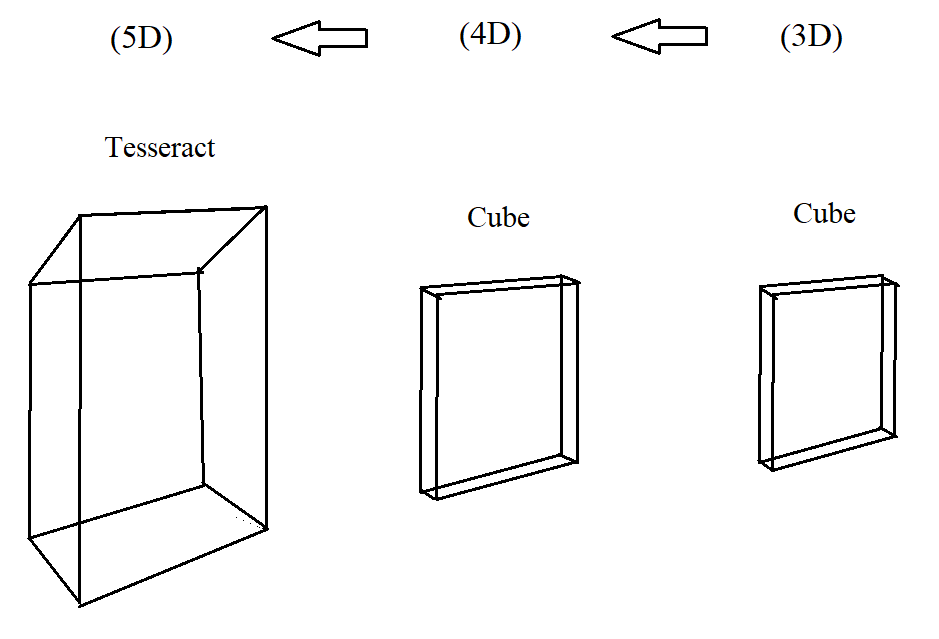
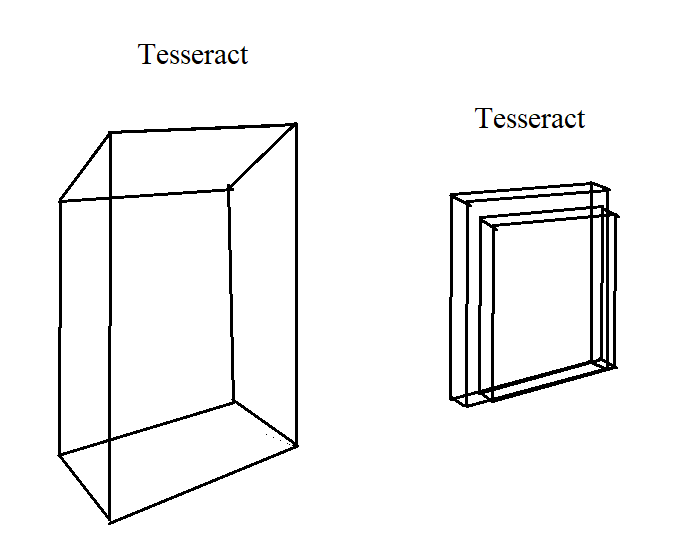
When the two cubes combine, they form another tesseract. The cube of information and interaction (3D) combines with the cube of mind and thought (4D), forming a 4D tesseract. When the tesseract of mind and thought combines with the tesseract of consciousness, a pentrace of consciousness (5D) is created. The work as a whole is therefore a five-dimensional entity, containing information and interaction in the third dimension, and mind and thought in the fourth dimension.